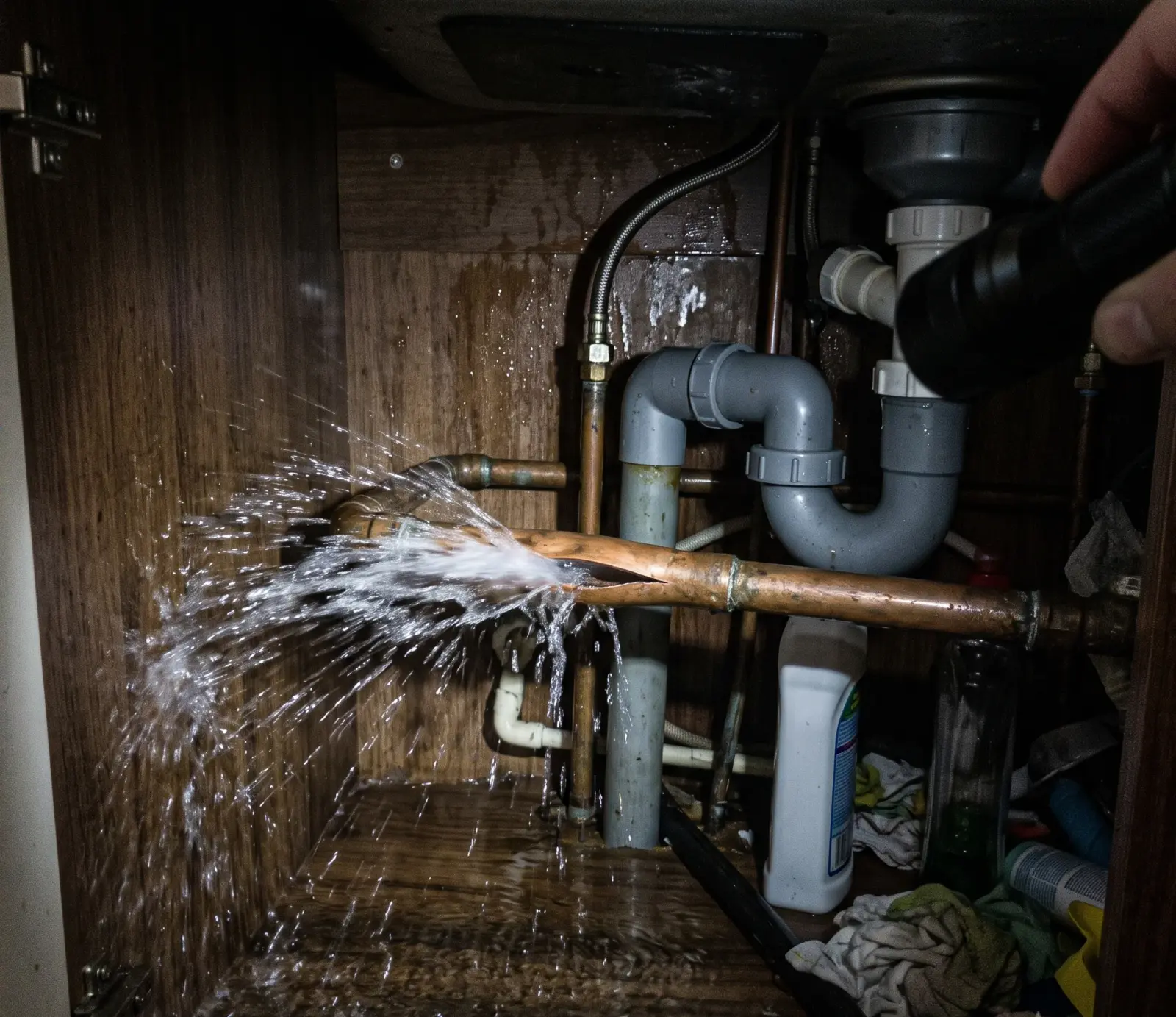
Hidden Water Paths Inside Buildings
A burst pipe can release water indoors wherever a supply line fails. The amount to remove depends on how far water travels and which surfaces it reaches, so the visible pool alone may not define the work area.
A burst pipe can release water inside a home or business wherever the site serves. Location pages cover some areas; other covered requests use the same referral connection. A coverage check can clarify whether the licensed pros we connect you with serve the affected property.
Calls may begin on a city or county page, while the referral process also links requests from other areas. The owner’s property address helps identify whether the pros we connect you with can respond there.
The Pooling Water Comes First
- Water Volume
- The estimate can reflect how much standing water remains and how many surfaces it reached.
- Room Reach
- A new damp mark in another room can indicate water traveled beyond the pipe location.
- Safe Entry
- Moisture readings in flooring and trim can identify damp areas after the puddle is removed.
- Surface Removal
- Extraction removes water indoors; it does not stop or repair a leaking pipe.
- Material Moisture
- Keep photos of the visible spread with the dated record for reference.
- Scope Limits
- Cold snaps can freeze water in exposed pipe sections and contribute to a break. Warmer weather does not rule one out. The season may help explain the pipe failure, but the indoor water boundary and material moisture still need assessment.
- RESPONSE TIMING
- an estimated $250–$1,300
Records for Insurance Discussions
Plumbing repair stops or fixes the failed pipe. Extraction removes water already released indoors, so the two tasks can follow the same incident while covering different work. Check the written work description. Pipe repair should identify work on the broken line or its connection; extraction should describe removing water from affected surfaces. Ask the provider to clarify any line item that combines those tasks, since water removal does not fix the leak source.
Moisture After Visible Water Is Gone
The provider confirms the leak has stopped, reviews safe access, and maps the visible water across rooms and surfaces. They note any wet thresholds or areas that cannot be approached safely. This helps set the removal area and estimate before equipment is used.
The pros we connect you with first review the shutoff status, water location, and safe route into affected rooms. They remove pooled water from accessible surfaces with suitable extraction equipment. Water in concealed spaces may need a separate assessment before further work is planned. Any drying work is a separate step from removing standing water.
Cost is shaped by the water left to remove and any separate drying work. One appointment may suffice when the pool is reachable and the source has stopped. Damp materials, hidden spread, or continuing water entry call for a written scope and follow-up checks.
WHICH CONDITIONS CALL FOR WATER REMOVAL OR A MOISTURE REVIEW
| Entry Conditions |
Water Removal |
|---|
| Indoor water accumulation after intrusion | Insurer work records |
| Water collecting anew in treated rooms | Scope estimate |
| Floor-level pooling in several disconnected spaces | Pooling removed; equipment addresses dampness |
Ask How Moisture Will Be Checked
From a dry spot, check whether water is still flowing from the pipe. Keep children and pets away from standing water. From a dry place, photograph the pipe area and visible spread, then describe both when contacting a provider. Stop if reaching the control or taking photos would mean entering an unsafe area.
Managing Contact With Standing Water
Water from a leak can carry residue from the materials it has passed through. Do not step into it or switch equipment on. Wet surfaces can be slippery even when no standing water is visible. A sagging or yielding floor also calls for distance; avoid walking across or pressing it. Tell the provider about these conditions before anyone enters to extract water.
Review The Work Involved In Extraction
Room count and narrow entry routes can alter the required setup. Have the pros we connect you with price the removal scope in writing.No local price band is supported here. A written estimate should tie the charge to the area needing extraction, water volume, access, and listed tasks. A clear task list also shows where water removal ends and separately scoped work begins. Ask whether a visit fee applies and get the work boundaries in writing before approval.Review the cost guide for the complete range and the factors behind the final amount.